
Messmer, Lindauer outline legislative issues in current session
Two local state legislators spoke about some of their bills in the current legislative session at a special meeting held at the Jasper Chamber of Commerce Saturday morning.
Among other things, State Senator Mark Messmer and State Representative Shane Lindauer outlined bills covering Covid-19 tort immunity, police investigative jurisdictions, regulating telehealth, and creating triggers to launch special legislative sessions during emergency orders.
Annually, the Jasper Chamber hosts the four local legislators for a series of public meetings to talk about the current legislative session. This year it is modified for the pandemic and the first meeting was held with only the media present. State Senator Erin Houshins and State Representative Steve Bartells did not attend this first session
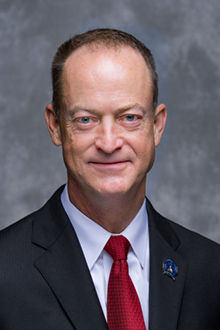
Messmer opened by outlining some of his bills.
A high priority bill, appropriately Senate Bill 1, is a bill Messmer authored to create protections for businesses and organizations from civil tort claims regarding Covid-19.
According to Messmer, shortly after Governor Eric Holcomb issued the emergency order as the pandemic hit the state, essential businesses approached the legislature about creating some protections from lawsuits by individuals claiming to have been exposed or infected in those businesses.
Messmer said the governor and state attorneys determined those protections could not be created through the emergency order so the legislature would need to do so.
“I started working on the bill about mid-June,” Messmer said.
Through the bill, individuals, nonprofit groups, K through 12 schools, businesses large and small, any kind of nonprofit organization, religious institution, and higher education would be protected from civil claims regarding Covid-19.
He pointed out that the group working on the bill has had input from trial lawyers to ensure it met the standards of protection while leaving room for actual cases of fraud, negligence, misconduct and intentional acts of omission to still be subject to tort claims.
He outlined an example of a case that would not be protected under the bill. “A lady testified that she had wanted to admit her mom to a nursing home to recover from a surgery,” Messmer said.
The lady said she had asked the nursing home if they had any cases of Covid-19. They said they did not having any Covid-19 patients in the home. “But, they knew they had three,” Messmer continued. “She sent her mom to the nursing home, she contracted Covid-19 and died within a month.”
Messmer also authored a bill to allow families to petition the Indiana State Police to open up an investigation if the family is unsatisfied with the investigation handled by a local jurisdiction.
The bill comes from a situation that occurred in Boonville involving the lack of investigation into the death of a woman. Boonville police closed the investigation after finding her and her vehicle in a water-filled strip coal mine pit. Police said the death was due to drowning but the parents of the woman — Kristy Kelley — couldn’t get the police to investigate suspicious circumstances like her cellphone being left at the bar where she was seen last, the suspicious damages to her vehicle with parts found about a mile from the lake where she allegedly drowned, and that the vehicle was in park with the keys found in Kelley’s pocket when it was recovered from the lake.
This bill would give families an opportunity to take evidence to the state police and appeal to them to open an investigation.
Another important bill for Messmer is one covering the fees internet service providers pay to attach fiber optics to existing utility poles. It is an issue as one of the state’s initiatives is rural broadband access.
Messmer said that some utility companies that provide internet service have raised the fees an exorbitant amount to deter competition. The bill would mirror what public utilities are allowed to charge for attachment fees.
“I don’t know if it will get a hearing but it is an important issue that has been brewing for a couple of years,” Messmer added.
Another important bill addresses a funding issue for schools. Currently, schools receive 85 percent of the funding for a student attending virtually compared to students in school who receive 100 percent funding. “The State Board of Education made a temporary emergency rule to allow them (schools) to get 100 percent funding for the fall semester,” Messmer said. “But, we need to fix that statutorily.”
The House of Representatives is considering a similar bill, Messmer said.
The senate will also consider a bill creating a path for appeal to individuals or businesses impacted by emergency orders created by local health departments. “There is currently no mechanism for anyone to appeal an emergency order by the local health department,” Messmer said.
This became apparent during Covid-19 and if passed, the bill would allow individuals to appeal to the local legislative body like the county commissioners. Messmer pointed out that giving citizens the right to appeal to a local legislative body leads to a more representative government.
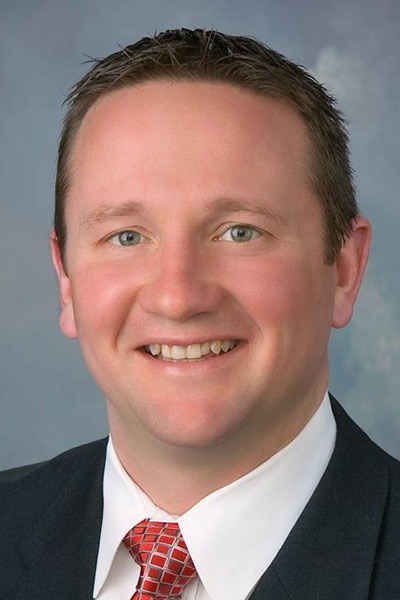
This year is a budget year for the legislature and State Representative Lindauer is pushing for a bill to be included in the budget that would establish a small business grant program with about $30 million to assist small businesses impacted by the shut down in 2020.
“It is one of our priority bills (House Bill 1004),” Lindauer said. “It builds off of what was implemented by the governor’s office this past fall.”
A bill brought to Lindauer by a County Commissioner Chad Blessinger would adjust how often county commissioners are required to attend road school — an annual class regarding road regulation, improvement and maintenance practices.
Currently, commissioners are required to attend it annually and under Lindauer’s bill this would be adjusted to require newly elected commissioners to attend in their first two years in office and then leave the attendance up to the local officials to determine how often they retake the class and when.
Lindauer is continuing his push to refine the process farmers and property owners face regarding ditch maintenance. According to Lindauer, farmers in particular have multiple regulatory agencies — DNR and IDEM specifically — they have to work with to maintain ditches that help drain their properties.
The bureaucracy and multitude of rules make it difficult for farmers to work on ditches. “We are trying to strike a balance on what farmers, specifically farmers because that is who has been impacted in our district, can do without having to go through a permitting process,” Lindauer said. “And we have been working on streamlining the permitting process by getting IDEM and DNR to unify their systems.”
Lindauer is working on a bill that would allow farmers to repair levees if their property or lives are endangered. Currently, the rule allows for farmers to repair failing levees if it endangers property “and” lives. The bill would change it to property “or” lives.
Lindauer noted that at least two local farmers have discussed their inability to farm acreage impacted by failing levees.
Changing the “and” to an “or” in the code gives DNR more flexibility to allow these things to take place, Lindauer said.
Another part of the bill would also create a requirement for DNR to notify property owners before they enter their property. Currently, officers can enter property unannounced to inspect a ditch or stream. This would adjust that to require notification except in an emergency situation.
Lindauer also said the House would be looking at a bill to work as a trigger for the legislature to convene in
“I’ve heard from a lot of constituents during this process who don’t feel their voices are being heard over the course of the months [of the emergency order],” Lindauer said. “They think we need to have a trigger if an emergency lasts for 30, 60, 90 days that the legislature needs to be called back in and consulted.”
Lindauer said they can then provide input from what they are hearing from their constituency.
“Our system of government was set up to be a balance of powers and this is trying to bring that back in line,” he said.
The house and senate are also both considering bills creating regulations and guidelines for telehealth/medicine which saw a rise in use in response to the pandemic. “It is important to increase access to health care for people in rural parts of the state,” Lindauer said.
The bill would create a uniform definition of what telehealth is and who is allowed to practice telehealth. This will clear up issues with Medicaid who was dictating where telehealth could be used. “My goal in the bill that I’ve been working on is that if you are operating within the scope of your practice per the State of Indiana, you can practice telehealth,” he said.
The General Assembly does not plan on meeting this week due to threats that have manifested across the country in anticipation of the inauguration ceremony on January 20.
